
Start with the label and OEM number
The strongest compressor enquiry starts with the number on the compressor label or the machine OEM reference. Compressor families can share a similar overall shape while differing in clutch, pulley, mounting or connection details.
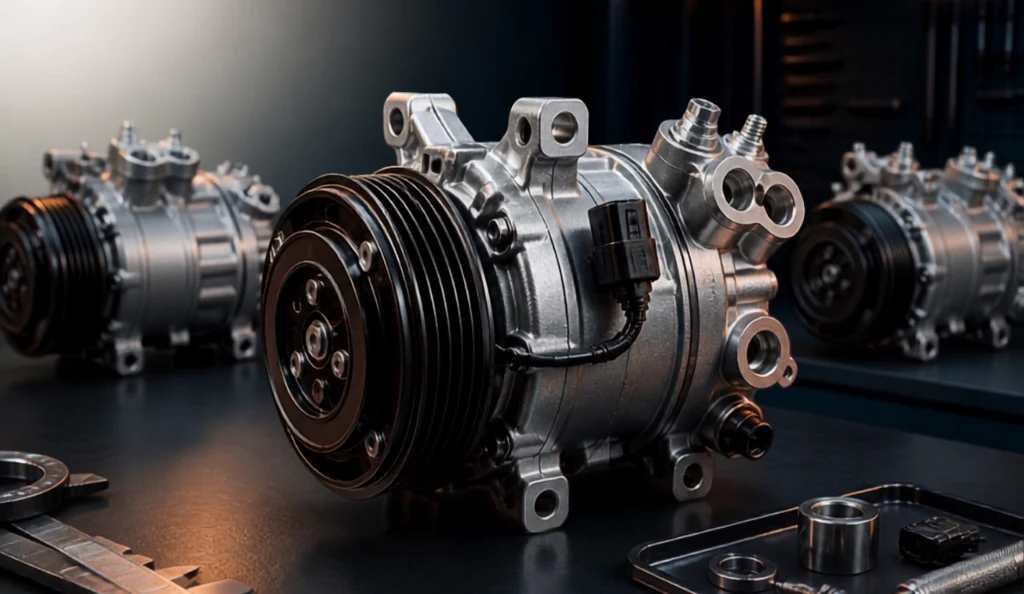
If the label is damaged, photograph the full compressor from several angles before it is removed or discarded. The mounting ears, pulley face, rear head and electrical connection are often useful identification clues.
Check the details that physically affect fitment
Voltage must match the machine electrical system. Pulley groove count and diameter affect belt alignment. Mounting style, ear spacing and bolt position determine whether the compressor will physically install. The clutch connector must also suit the application.
- Compressor model or family marking.
- 12 V or 24 V electrical system.
- Pulley groove count and approximate diameter.
- Mounting arrangement and bolt pattern.
- Clutch or coil electrical connector.
- OEM or supplier reference number.
- Machine model, engine and serial information if available.
Refrigerant and oil information are supporting checks, not guesses
The refrigerant and oil specification should come from reliable application or compressor information. Do not assume the correct charge, oil type or oil volume merely because two compressors share a body family.
If the old compressor failed internally, the rest of the air-conditioning system may also need inspection and cleaning before a replacement is fitted. Product identification and system repair are separate decisions.
A clear enquiry is faster to quote
Send Terra the compressor number, machine details and clear photographs of the label, pulley, mounting and connector. Those details make it much easier to compare the request with a verified compressor record before quotation.
FIND. MATCH. MOVE.
Have a number to check?
Send the number, photo and machine or vehicle details. Terra helps turn the reference into a clear quote request.